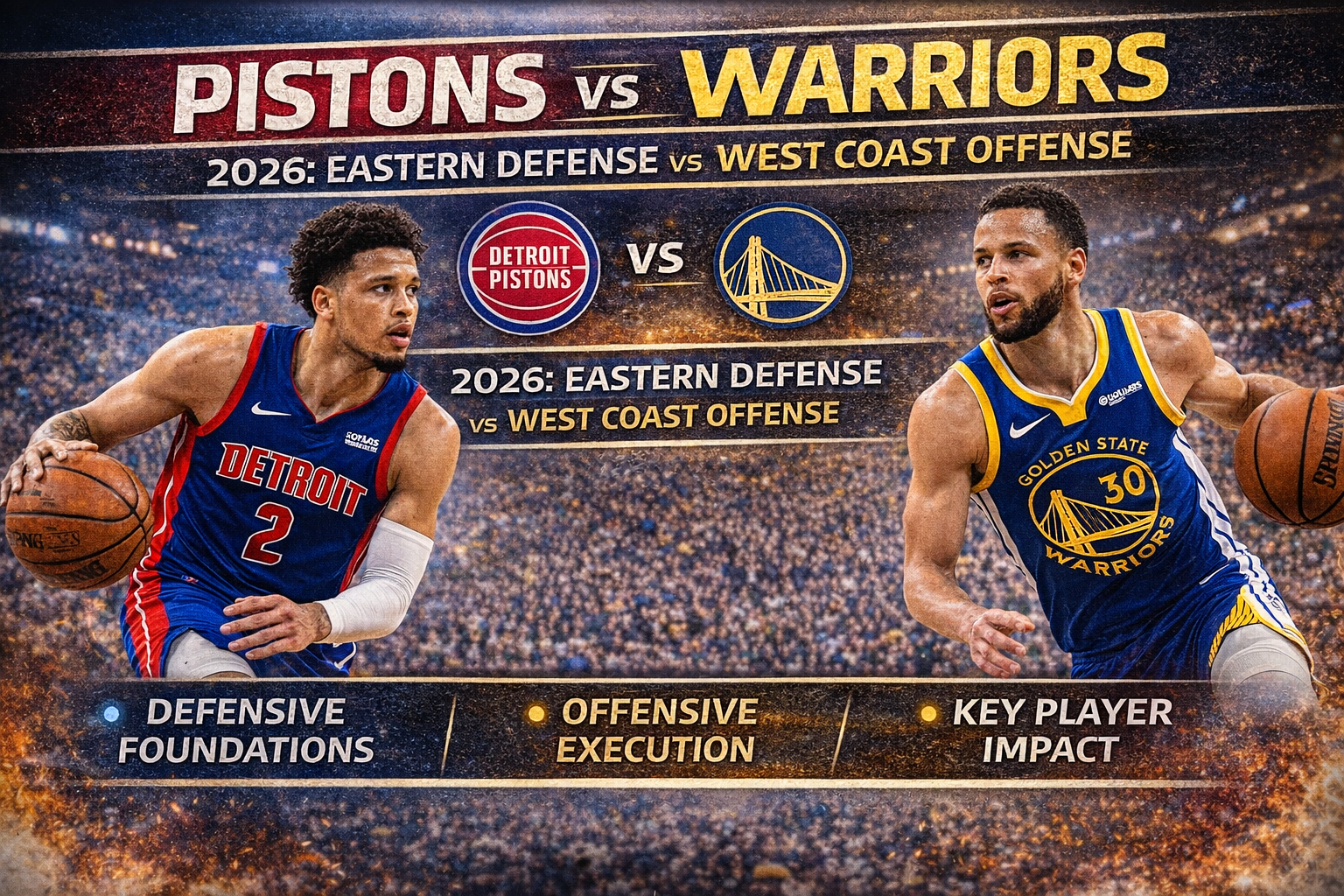
Introduction: Clash of Styles
The Detroit Pistons and Golden State Warriors met in San Francisco in late January 2026 in a game that quickly became a focal point for NBA analysts. Detroit entered with one of the best records in the Eastern Conference and a defense that ranks among the league’s most disciplined, while Golden State sought to maximize home-court advantage and sustain its push toward a higher seed in the Western Conference standings. The matchup carried significant narrative weight because it was the first regular-season meeting between these teams this season, offering insight into how contrasting identities play out head-to-head.
Pre-Game Context: Team Trajectories
Detroit’s 34-12 record reflected consistent excellence, built around defensive cohesion, efficient shot creation from key scorers like Cade Cunningham, and rebounding presence from its frontline. In contrast, Golden State’s 27-22 mark stemmed from dynamic motion offense but mixed defensive results, particularly in transition coverage and rebounding. Warriors stars like Stephen Curry remained focal points of their offense, but roster injuries had reduced depth.
First Half: Establishing Identity
In the early minutes, both teams imposed their strategic signatures. Detroit’s early possessions emphasized half-court sets designed to generate open looks from the perimeter and post entry passes to create spacing. The Pistons’ defensive rotations forced Golden State into contested looks on the perimeter, reflecting Detroit’s focus on limiting easy transition buckets. Golden State’s response leveraged its traditional ball movement and zone manipulation to create advantages for non-stationary shooters.
Second Half: Strategic Adjustments
As the game progressed, Michigan’s defensive discipline began to demonstrate its value. Detroit contested pick-and-roll actions effectively and communicated on switches, making Golden State expend more possessions before attempting shots. Golden State countered by increasing off-ball screen actions and attacking closeouts, seeking to disrupt Detroit’s defensive balance. The Pistons rotated quickly on the weak side and cut passing lanes, forcing the Warriors into lower-efficiency attempts. Golden State’s offense relied increasingly on spacing and drive-and-kick sequences, but Detroit’s defense limited open looks beyond the arc in critical stretches.
Key Player Impact
Cade Cunningham: Detroit’s All-Star guard spearheaded offensive sets with a blend of pick-and-roll playmaking and drive creation that kept the Warriors’ defense honest. His ability to navigate screens and make post splits created opportunities not only for his scoring but also for secondary shooters.
Stephen Curry: As Golden State’s primary offensive engine, Curry’s perimeter shooting remained the centerpiece of spacing. His early catch-and-shoot triples forced Detroit defenders to extend coverage and risk penetration opportunities.
Jalen Duren and Interior Frontlines: Detroit’s size advantage in the paint allowed it to secure rebounds and limit second-chance points. Presence inside reduced Golden State’s opportunities to exploit offensive rebounds and reset possessions.
Tactical Themes
Three major strategic themes emerged:
- Defensive Identity vs Offensive Creativity: Detroit’s disciplined structure consistently slowed Golden State’s pace, forcing longer possessions and more contested shots.
- Space Creation vs Paint Efficiency: Golden State attempted to stretch the defense with rapid ball movement, while Detroit’s interior defenders focused on rim protection and rebounding margins.
- Depth and Adjustment: Detroit’s bench contributions helped sustain defensive intensity, whereas Golden State’s bench showed flashes but lacked consistent counter adjustment amid injuries.
Broader Implications
From a season outlook perspective, this matchup highlighted both Detroit’s solidity and Golden State’s need for strategic refinement. Detroit’s balanced roster and defensive cohesion reaffirm its status as a contender in the East. For Golden State, the game underscored the necessity of maximizing shooting efficiency and defensive rotations against disciplined schemes if the team hopes to secure home-court advantage in the playoffs.
Conclusion
The Pistons vs Warriors matchup was not just a regular-season test. It was a microcosm of contrasting NBA philosophies. Detroit’s disciplined defense and rotational balance challenged Golden State’s fluid offense and individual shooting talent. How each team evolves tactically in the weeks ahead will shape their paths toward deep postseason runs and strategic identity definitions.