Introduction: A Lopsided Result in Context
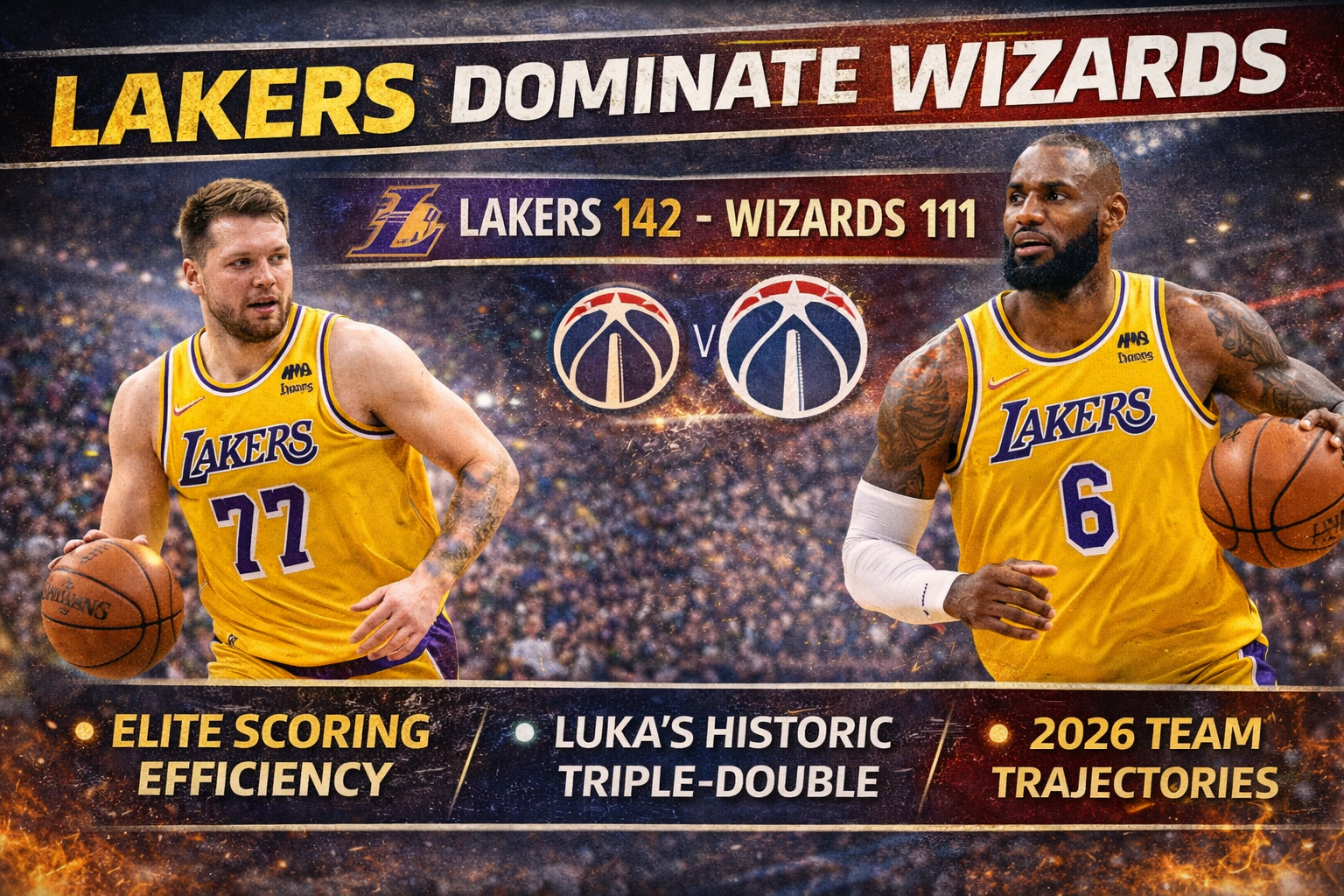
In their latest meeting on January 31, 2026, the Los Angeles Lakers defeated the Washington Wizards 142-111 in Washington, D.C. The margin and performance underscored the difference in roster construction, offensive execution, and competitive consistency between the two playoff-oriented and rebuilding franchises.
Pre-Game Dynamics and Team Trajectories
The Lakers entered the matchup with a strong overall record and a balanced scoring attack, while the Wizards were mired in a challenging season with an inconsistent defense and youth-oriented rotation. Los Angeles was on a substantial road trip, demonstrating road resilience and depth. Washington came in with modest momentum from a rare back-to-back win but lacked the overall firepower to counter a high-octane offense.
First Half: Establishing Control
From the outset, Los Angeles asserted offensive rhythm. The Lakers shot efficiently from the field, converting early possessions into high-percentage baskets. Luka Dončić’s versatility allowed him to score and create for teammates, forcing defensive shifts that opened scoring windows for interior and perimeter options. Washington struggled to match intensity, and the Lakers built a decisive lead by halftime.
Luka Dončić: Superstar Execution
Dončić produced a historic performance, recording a triple-double with 37 points, 13 assists, and 11 rebounds. He became the first Laker in franchise history to record a triple-double in a single half, dominating both scoring and playmaking responsibilities. His ability to control tempo and create mismatches was a defining factor in Los Angeles’s offensive efficiency.
Complementary Contributions
The Lakers received significant support from inside presence and secondary scoring. Deandre Ayton posted a double-double with 28 points and 13 rebounds, providing interior balance to complement perimeter creation. LeBron James contributed 20 points and six assists, combining veteran leadership with timely scoring. Bench contributions helped sustain momentum and manage lineup balance.
Washington’s Struggles and Opportunities
For the Wizards, offensive inconsistency and defensive breakdowns defined the contest. Washington’s shooting percentages lagged markedly behind Los Angeles’s efficiency, and the team was unable to contain Dončić’s orchestration of the offense. Alex Sarr and Malaki Branham were among the top contributors but could not overcome the defensive mismatches or the Lakers’ transition scoring.
This result reflected broader challenges for Washington’s roster construction and defensive cohesion, particularly against teams with elite playmakers and multi-option attacks.
Tactical Insights
Several tactical themes emerged from this game:
- Offensive balance and spacing: The Lakers’ ability to space the floor and generate open looks created constant defensive dilemmas for Washington.
- Star orchestration: Dončić’s court vision and decision making elevated Los Angeles’s offensive efficiency beyond raw scoring.
- Interior presence: Ayton’s scoring and rebounding provided balance to perimeter creation and minimized second-chance opportunities for the Wizards.
- Consistent execution: Los Angeles maintained high field goal percentages and limited prolonged scoring droughts, while Washington struggled to sustain offensive runs.
Implications for Season Trajectories
This game reinforced Los Angeles’s status as a strong contender in the Western Conference. The ability to produce dominant offensive performances on the road and integrate contributions from multiple stars enhances their playoff outlook. For Washington, the loss highlighted persistent gaps in defensive coherence and offensive depth, areas requiring continued development for future competitiveness.
Conclusion
The Lakers’ 142-111 win over the Wizards was more than a high-scoring result. It was an exemplar of elite offensive execution, star leadership, and tactical balance. Los Angeles’s performance emphasized both current strength and strategic readiness for sustained contention. Washington’s challenges serve as a reminder of the developmental work necessary in a rebuilding effort.