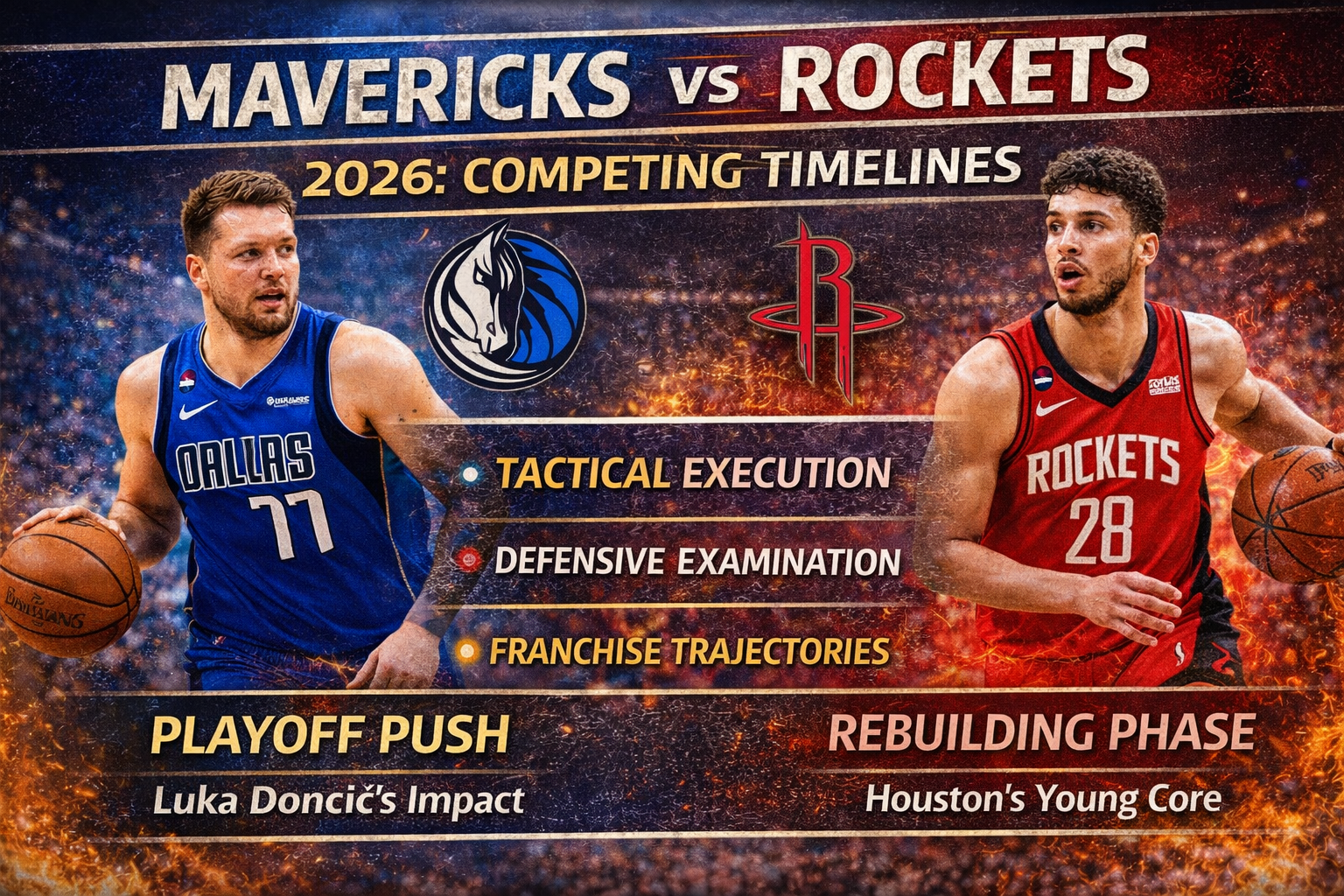
Context: A Rivalry Framed by Direction, Not Geography
When the Dallas Mavericks faced the Houston Rockets in their most recent meeting, the game carried weight beyond state lines. Dallas entered the matchup focused on immediate results and postseason positioning. Houston arrived with a younger core, measuring progress through competitiveness and execution rather than wins alone.
This contrast shaped the tone of the night. Dallas played with urgency and precision. Houston played with energy, experimentation, and stretches of inconsistency that continue to define a rebuilding team learning how to close games.
First Half: Pace Control vs Energy Bursts
Early possessions established the core dynamic. Dallas worked deliberately, spacing the floor and forcing Houston to defend multiple actions per possession. The Rockets countered with athletic pressure and transition attempts, trying to speed the game up and disrupt rhythm.
The Mavericks’ ability to dictate tempo became an early separator. Rather than chasing Houston’s pace, Dallas slowed the game when needed, valuing shot quality over volume. Houston’s best moments came when defensive stops fueled quick offense, but sustaining that approach proved difficult against a disciplined half-court team.
Luka Dončić and the Gravity Problem
Any Mavericks analysis begins with Luka Dončić, and this game reinforced why. Dončić’s scoring was only part of his influence. His real impact came from defensive gravity.
Houston repeatedly sent help toward him, opening passing lanes and forcing rotations that Dallas punished with timely cuts and perimeter shooting. Even when Houston limited Dončić’s isolation efficiency, his presence distorted defensive structure. That distortion created easier looks for role players and reduced Houston’s margin for error.
Houston’s Young Core: Flashes and Friction
For the Rockets, the night was a familiar blend of promise and frustration. Alperen Şengün showcased his value as a playmaking hub, using footwork and vision to punish overhelp. Jalen Green provided scoring bursts that reminded observers why Houston remains optimistic about its offensive ceiling.
The issue was cohesion. Defensive communication broke down during extended possessions. Shot selection drifted under pressure. Against a team as composed as Dallas, those small lapses accumulated quickly.
Second Half: Execution Becomes the Deciding Factor
As the game progressed, the difference between a contender and a developing roster became clearer. Dallas adjusted defensively, cutting off Houston’s easiest transition paths and forcing more half-court execution. Houston, in turn, struggled to generate consistent advantages without pace.
Dallas’ offense leaned into structure. Ball movement remained sharp, and late-clock decisions favored control over creativity. Houston continued to fight, but the inability to string together stops limited any sustained comeback push.
Tactical Takeaways
1. Dallas’ identity is built for pressure games
The Mavericks showed an ability to win without playing fast or flashy. Their offense thrives on patience, spacing, and decision clarity, traits that translate well to playoff environments.
2. Houston’s growth phase is still visible
The Rockets’ athleticism and skill are real, but execution under sustained defensive pressure remains a hurdle. Learning when to slow down, reset, and trust structure is the next step in their development.
3. Star stability matters
Dončić’s command of the game contrasted sharply with Houston’s committee approach. Dallas always had a reliable decision maker. Houston relied on momentum, which is harder to maintain against elite teams.
What This Game Says About the Season
For Dallas, this matchup reinforced confidence. Beating a motivated, high-energy opponent without abandoning structure is a strong indicator of maturity. The Mavericks look increasingly comfortable in games where control matters more than pace.
For Houston, the loss still served a purpose. Competing stretches showed the roster’s potential, but the gaps highlighted exactly where growth is required. These are the games that accelerate learning, even when the result falls short.
Conclusion
The latest Mavericks vs Rockets meeting was not defined by rivalry drama, but by clarity of purpose. Dallas played like a team measured by wins and playoff outcomes. Houston played like a team measured by progress and learning curves.
Both approaches are valid at different stages. On this night, the difference in experience, execution, and late-game composure told the story.